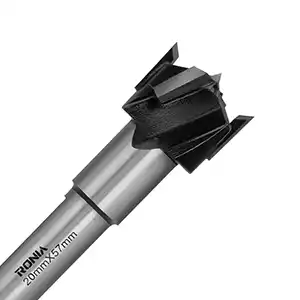
T Slot Router Bits

T-slot Router Bits for Precise Professional Woodworking

T-slot Router Bits help professional workshops create accurate T-shaped channels for fasteners, fixtures, sliding hardware, and specialized woodworking assemblies. The right bit can improve dimensional consistency, reduce machining time, and support cleaner production results. Ronia provides precision cutting solutions for woodworking professionals and industrial manufacturers. Browse the T-slot Router Bits range to match your router, material, and application, or contact our sales team for expert purchasing guidance.

What are T-slot Router Bits?

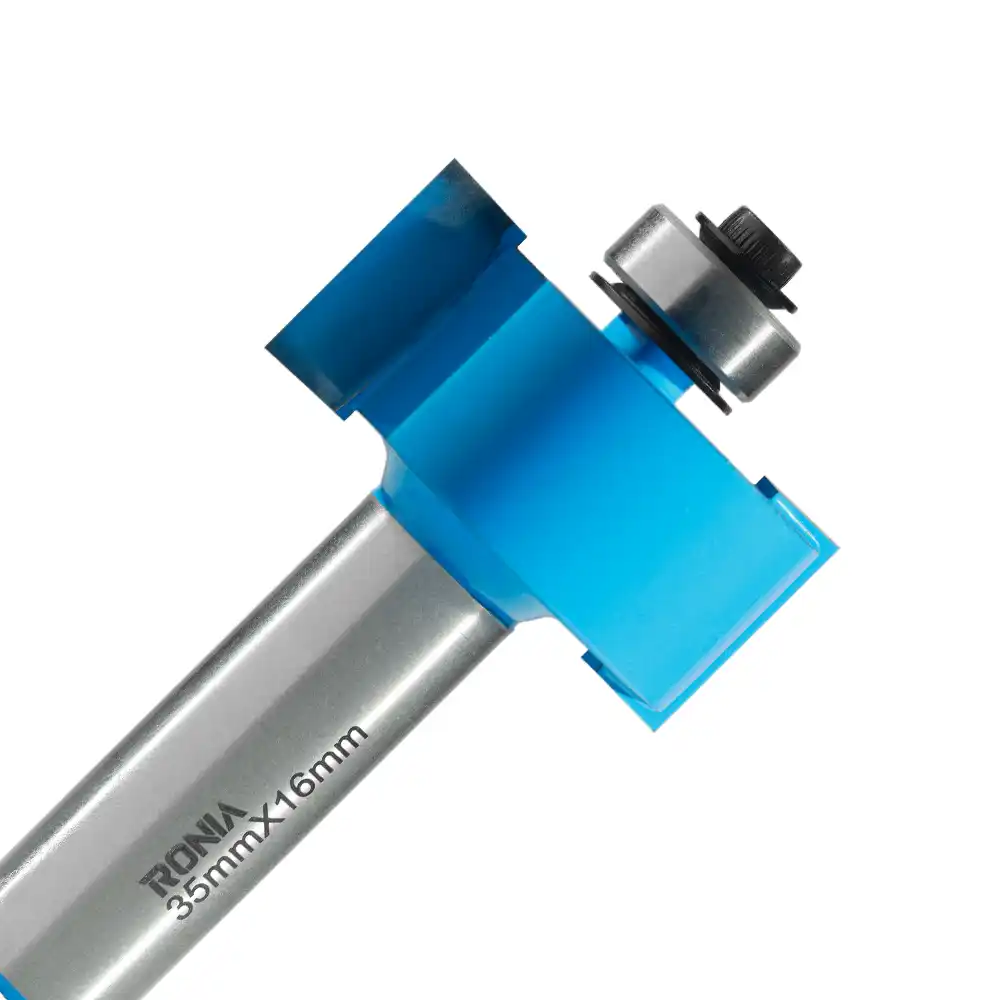
T-slot Router Bits are specialized rotary cutting tools designed to create T-shaped grooves in wood and compatible sheet materials. A typical operation begins with a straight slot, followed by the bit forming an undercut beneath the surface. This profile allows bolts, nuts, clamps, tracks, and other hardware to sit securely inside the channel.

These bits are widely used for workbenches, jigs, fixtures, CNC routing, signage, cabinetry, and modular woodworking systems. Their geometry is particularly useful when a project requires adjustable positioning or concealed hardware. Correct bit selection and machine settings help produce clean channels while maintaining stable cutting performance.

Key Features and Benefits

  • Precision profile: The specialized cutting geometry produces consistent T-shaped channels for accurate hardware installation and repeatable assembly.
  • Durable construction: Quality carbide cutting edges withstand demanding routing operations and help extend useful tool life.
  • Clean cutting: Sharp edges support controlled material removal and can reduce rough surfaces around the routed channel.
  • Efficient production: Properly selected dimensions allow operators to create functional T-slots without unnecessary machining passes.
  • Versatile use: T-slot Router Bits support furniture production, workbenches, fixtures, templates, displays, and custom woodworking projects.
  • Machine compatibility: Different shank and diameter options make it easier to match the tool with a suitable electric router or CNC spindle.
  • Controlled operation: Appropriate feed rates, cutting depth, and spindle speed help improve stability, safety, and finished quality.

Types of T-slot Router Bits

T-slot Router Bits can be grouped by cutting diameter, slot dimensions, cutting depth, shank size, and overall tool geometry. Smaller versions are useful for compact routers and lighter workshop applications, while larger profiles can support deeper or wider channels when the machine has sufficient power and rigidity.

For handheld work, electric routers are commonly used to produce T-slots in workbenches, panels, fixtures, and custom furniture components. Battery-powered routers can offer mobility for selected light-duty applications, although available power, runtime, and maximum bit size should be checked carefully before use.

CNC-compatible T-slot Router Bits are suited to repeat production where controlled positioning and consistent dimensions are important. Pneumatic routing equipment may also be used in specialized industrial environments, provided the tool holder, speed range, and machine specifications are compatible.

Different geometries can address different hardware requirements. Some profiles are intended for standard T-track systems, while others are selected for custom fasteners or specialized fixtures. Always compare the finished slot dimensions with the hardware specification before purchasing to ensure a secure fit and reliable operation.

How to Choose the Right T-slot Router Bits

  1. Match the material: Identify whether the primary materials are hardwood, softwood, plywood, MDF, particleboard, or another compatible panel. Choose a cutting geometry and carbide quality suitable for the material to maintain clean results and reduce premature wear.
  2. Check machine compatibility: Confirm your router or CNC spindle capacity, collet size, compatible shank diameter, maximum RPM, and recommended operating parameters. A correct match improves control and reduces the risk of unstable cutting.
  3. Define the slot dimensions: Measure the required T-slot width, depth, opening, and hardware dimensions before selecting a tool. The cutting profile should create enough clearance for installation without producing an unnecessarily oversized channel.
  4. Consider production volume: A workshop producing occasional fixtures may need a versatile standard bit, while an industrial manufacturer may prioritize durable construction and consistent geometry for repeated routing cycles. Select specifications that support your actual workload rather than paying for unnecessary capacity.
  5. Balance cost and performance: Compare purchase price with expected tool life, cutting quality, downtime, replacement frequency, and machine compatibility. Investing in quality power tools for workshops can reduce operating interruptions and support more predictable production costs.

Before ordering, review the product specifications and your machine manual. Pay close attention to shank diameter, cutting diameter, cutting length, overall length, maximum speed, and recommended materials. For CNC production, also consider workholding, feed rate, spindle speed, and the number of passes required. These details help buyers select industrial wood cutting equipment that performs reliably under real production conditions.

For buyers seeking the best woodworking tools, tool selection should also reflect expected cutting frequency and operator experience. A suitable T-slot profile helps maintain accurate assembly, minimizes adjustment work, and supports dependable results across individual projects and larger production batches over time.

Why Choose Ronia for T-slot Router Bits

Ronia combines Turkish engineering and manufacturing experience with a focus on practical woodworking requirements. Its T-slot Router Bits are positioned for workshops, furniture manufacturers, joinery specialists, fixture makers, and industrial users seeking dependable cutting performance and repeatable results.

For international B2B buyers, documented quality and compliance are important considerations. Ronia supports products and production systems with relevant international standards, including CE and ISO certifications where applicable. Buyers should confirm the specific certification and technical documentation for the selected model before purchase.

Ronia also supports long-term operation through spare parts availability and after-sales assistance. Technical guidance can help customers evaluate dimensions, machine compatibility, application requirements, and operating conditions before placing an order. This support helps reduce selection errors and contributes to smoother production planning.

Global shipping availability makes Ronia a practical sourcing option for customers outside Turkey. Whether you operate a compact workshop or a larger manufacturing facility, Ronia aims to provide professional cutting solutions that support accuracy,