


Showing 1 - 29 out of 29
Page 1 out of 1
| Thumbnails | Products | D | S | b | Z |
|---|---|---|---|---|---|
![]() |
|||||
![]() |
|||||
![]() |
|||||
![]() |
|||||
![]() |
|||||
![]() |
|||||
![]() |
|||||
![]() |
|||||
![]() |
|||||
![]() |
|||||
![]() |
|||||
![]() |
|||||
![]() |
|||||
![]() |
|||||
![]() |
|||||
![]() |
|||||
![]() |
|||||
![]() |
|||||
![]() |
|||||
![]() |
|||||
![]() |
|||||
![]() |
|||||
![]() |
|||||
![]() |
|||||
![]() |
|||||
![]() |
|||||
![]() |
|||||
![]() |
|||||
![]() |
Universal Saw Blades for Reliable Professional Cutting
Universal Saw Blades provide workshops and industrial manufacturers with a cutting solution for processing different wood-based materials. Designed for versatility, consistent results, and service, they help businesses maintain efficient cutting operations without frequent blade changes. Explore Ronia Universal Saw Blades to match your machinery, improve cutting quality, reduce downtime, and support reliable production across demanding applications.
What are Universal Saw Blades?
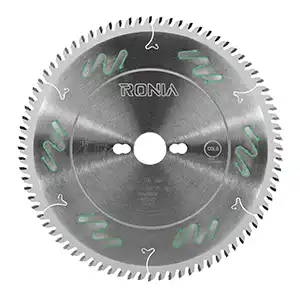
Universal Saw Blades are versatile circular cutting tools designed to handle a broad range of woodworking materials and applications. They are commonly installed on saw machines to cut materials such as solid wood, MDF, particleboard, plywood, laminated panels, and other wood-based products.
The blade rotates at high speed while its teeth progressively remove material along the cutting line. Tooth design, diameter, kerf, bore, and material construction determine how effectively a blade performs on a particular application. A properly selected universal blade can provide clean cuts, stable operation, and consistent productivity across different jobs.
For workshops that process several material types, universal blades can simplify tool management and reduce the need to maintain a large inventory of specialized cutting tools. They are useful when flexibility and dependable performance matter more than specialized cutting characteristics.
Key Features and Benefits
- Versatile performance: Designed to process multiple wood-based materials, these blades support varied cutting requirements with fewer blade changes.
- Precision cutting: Accurate tooth geometry helps create controlled cuts and consistent dimensions across repeated production tasks.
- Durable construction: Quality materials and robust manufacturing help withstand regular use in woodworking environments.
- Efficient operation: Cutting performance can reduce unnecessary rework, material waste, and production interruptions.
- Stable performance: Correct blade balance and construction support smooth operation and predictable operation.
- Broad compatibility: Available specifications can accommodate different machines, materials, and cutting requirements.
- Safer operation: Using a blade that matches the machine and application supports controlled cutting and machine performance.
Types of Universal Saw Blades
General-Purpose Blades
General-purpose blades are designed for everyday woodworking tasks involving common materials such as solid wood, plywood, MDF, and particleboard. They offer a practical balance between cutting speed, surface quality, and durability, making them suitable for workshops with varied production requirements. These blades are typically driven by electric saw machines.
Fine-Cut Blades
Fine-cut universal blades use tooth configurations focused on cleaner finishes and more controlled material removal. They are useful for applications where visible surfaces require improved edge quality, including furniture components, laminated boards, and cabinet panels. Electric-powered panel saws and table saws commonly use this type.
Heavy-Duty Blades
Heavy-duty blades are intended for demanding production environments and frequent cutting cycles. Their robust construction supports intensive use on thicker or harder wood-based materials. They are commonly paired with industrial electric saws and automated cutting equipment where production volume and service life are important.
Specialty Universal Blades
Some universal designs are optimized for specific combinations of materials or machine requirements. Selection may depend on diameter, bore, tooth count, kerf, and machine speed rather than the power source alone. Battery-powered and pneumatic cutting systems may require specially approved blade specifications, so buyers should always verify compatibility before installation.
How to Choose the Right Universal Saw Blades
- Match your machine: Confirm the required blade diameter, bore size, maximum speed, rotation direction, and machine compatibility before purchasing. Correct specifications support safe installation and dependable cutting performance.
- Assess production volume: Small workshops may prioritize versatility and value, while manufacturers should focus on durability, stable performance, and service life. Choose a blade that matches your daily workload rather than only its purchase price.
- Identify your materials: Consider whether you primarily cut solid timber, MDF, plywood, particleboard, laminate, or mixed materials. Material hardness, thickness, coating, and required surface quality can influence tooth count and blade design.
- Define your finish requirements: Select a configuration based on whether your priority is fast rough cutting, clean furniture edges, or a balance between speed and finish. More specialized cutting requirements may justify a dedicated blade rather than a universal option.
- Compare total operating value: Evaluate blade durability, cutting consistency, replacement frequency, and potential material savings alongside the initial cost. This approach helps buyers choose quality power tools for workshops while controlling long-term production expenses.
Before ordering, buyers should check the saw manufacturer’s operating recommendations and blade specifications. Proper installation, alignment, rotation direction, and operating speed are essential for achieving the expected result. Operators should inspect blades regularly and replace damaged or excessively worn components according to maintenance procedures.
For purchasing teams, supply continuity is important. Keeping compatible replacement blades available can reduce production delays when a cutting tool reaches the end of its service life. Standardizing specifications across compatible machines can also simplify purchasing, storage, and maintenance planning.
Why Choose Ronia for Universal Saw Blades
Ronia combines Turkish engineering and manufacturing expertise with practical experience serving professional woodworking markets. Its cutting solutions are developed for workshops, manufacturers, and industrial buyers seeking dependable performance, consistent quality, and machine compatibility.
Ronia supports purchasing requirements with products designed around recognized quality and safety expectations, including CE and ISO certifications where applicable. Buyers can also benefit from spare parts availability and after-sales support, helping maintenance teams address product requirements and keep production equipment operating efficiently.
For international customers, Ronia offers global shipping availability and support for buyers sourcing woodworking equipment and cutting tools from Turkey. This helps businesses access suitable solutions while maintaining direct communication with an experienced supplier.
Choosing a dependable supplier can also simplify purchasing. Clear product specifications, replacement availability, technical guidance, and responsive support help procurement teams manage recurring cutting-tool requirements more effectively. For companies building industrial wood cutting equipment, Ronia provides practical solutions for different production environments.