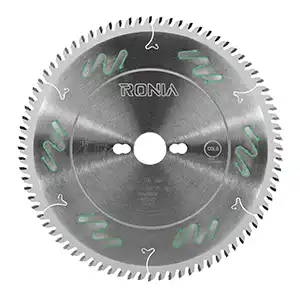
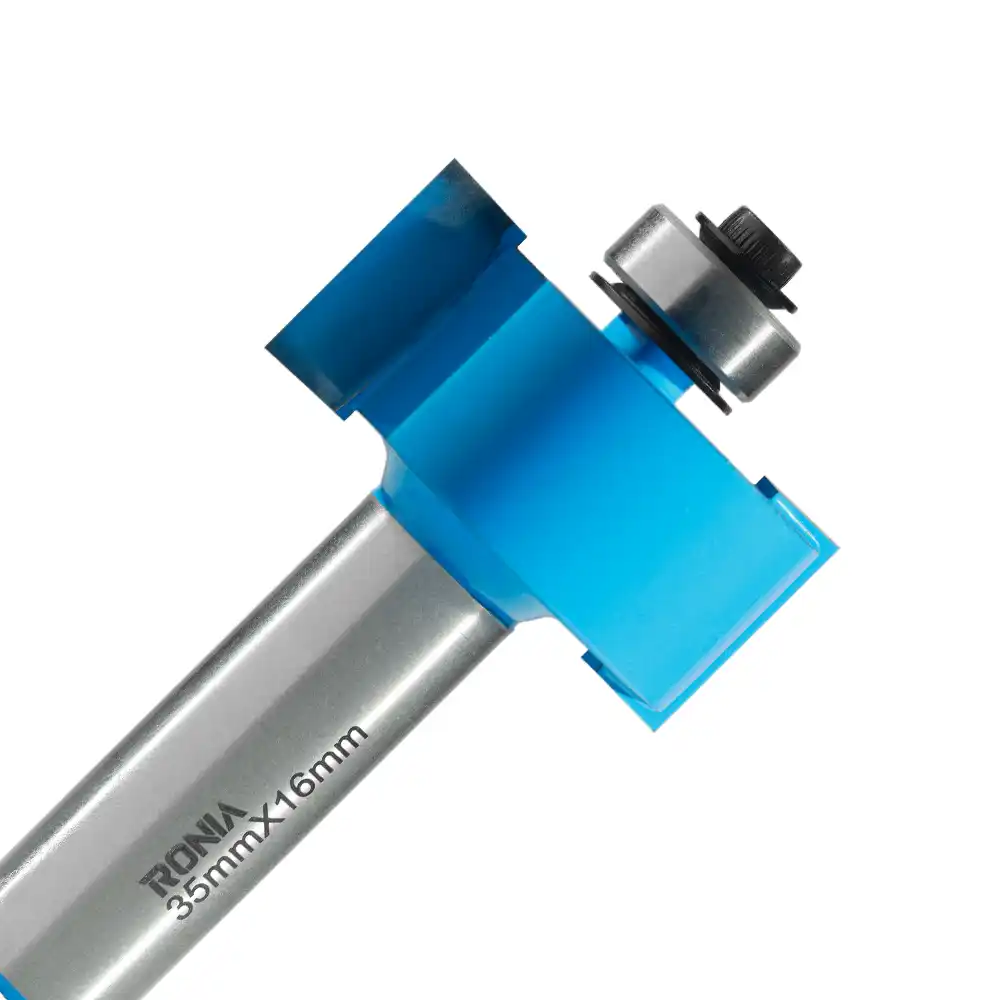
| Thumbnails | Products | D | Z | S | b | Blade Rotation Speed |
|---|---|---|---|---|---|---|
![]() |
||||||
![]() |
|
|||||
![]() |
|
|||||
![]() |
|
|||||
![]() |
|
|||||
![]() |
|
Scoring Blades for Precise, Efficient Woodworking Production
Scoring Blades are essential cutting components for workshops and manufacturers that demand clean panel edges, accurate cuts, and consistent production results. Designed to work ahead of the main saw blade, they reduce chipping and improve cut quality on laminated boards and other wood-based panels. Explore Ronia Scoring Blades to improve cutting performance, reduce rework, and achieve dependable results across demanding professional applications.
What are Scoring Blades?
Scoring Blades are specialized circular cutting tools used with panel saws, beam saws, and related woodworking machines. Their main function is to make a shallow preliminary cut on the underside or surface of a panel before the main blade completes the cut. This controlled incision helps prevent surface breakout and chipping, especially when processing coated materials.
A scoring blade normally operates in alignment with the main saw blade, creating a narrow groove that supports a cleaner final cut. Depending on the machine, material, and blade design, scoring systems can use different tooth geometries, kerf widths, and diameters. They are widely used for MDF, particleboard, melamine-faced panels, laminates, and other engineered wood products.
Key Features and Benefits
- Clean panel edges: Scoring blades create a preliminary cut that significantly reduces chipping on decorative and coated surfaces.
- High precision: Accurate tooth geometry supports consistent grooves and helps maintain alignment with the main cutting blade.
- Durable construction: Quality carbide teeth and robust blade bodies provide dependable service during demanding production cycles.
- Improved efficiency: Cleaner cuts reduce finishing work, material waste, and production interruptions.
- Machine compatibility: Different diameters, kerfs, bores, and tooth configurations help buyers match blades to existing equipment.
- Safer operation: Correctly selected and properly installed blades support stable cutting and predictable machine performance.
- Consistent results: Reliable cutting geometry helps manufacturers maintain repeatable quality across larger production batches.
Types of Scoring Blades
Conventional Scoring Blades
Conventional scoring blades are designed for common panel saw applications where a separate scoring unit prepares the material before the main blade cuts through it. They are suitable for workshops processing MDF, particleboard, laminated panels, and similar materials. These blades are typically powered by the machine’s electric drive rather than by a separate blade power source.
Adjustable Scoring Blades
Adjustable scoring blades allow operators to fine-tune the scoring width for different materials and cutting requirements. This flexibility can be valuable in production environments where panel thicknesses, coatings, and machine settings change frequently. They are commonly used on industrial panel saws and automated woodworking lines.
Specialized Tooth Geometry Blades
Some scoring blades use specific tooth arrangements designed for coated boards, laminated surfaces, or other demanding materials. Selecting the correct geometry can improve surface quality and extend blade life. These blades are especially useful for manufacturers seeking industrial wood cutting equipment that delivers consistent results.
How to Choose the Right Scoring Blades
- Match the machine: Check the saw model, blade diameter, bore, rotation direction, and available scoring unit specifications before ordering. Correct dimensions ensure safe installation and reliable operation.
- Consider production volume: High-volume factories should prioritize durable construction, stable cutting performance, and longer service intervals. Smaller workshops may focus more heavily on versatility and cost efficiency.
- Identify the material: Select a blade according to the boards you process, including MDF, particleboard, melamine, laminate, or other engineered materials. Material hardness and surface coating can influence tooth geometry and blade selection.
- Check cutting requirements: Consider the desired scoring width, kerf, edge quality, and relationship between the scoring blade and the main saw blade. Proper matching helps achieve clean, accurately aligned cuts.
- Balance performance and budget: The lowest purchase price is not always the lowest operating cost. Compare durability, cutting quality, maintenance needs, and expected service life to choose quality power tools for workshops and production environments.
For buyers managing multiple machines, standardization is another important consideration. Using compatible scoring blades across a production line can simplify inventory planning and make replacement schedules easier to manage. It also helps maintenance teams identify the correct blade specifications quickly, reducing delays when a blade needs replacement.
To maximize blade performance, operators should follow the woodworking machine manufacturer’s installation and operating recommendations. The scoring blade should be correctly aligned with the main blade, securely mounted, and inspected regularly for wear or damage. Proper setup is essential because even a high-quality blade can produce poor results when alignment, speed, or cutting depth is incorrect.
For demanding B2B operations, purchasing decisions should also consider supply reliability. A suitable supplier should provide clear technical specifications, responsive communication, and dependable replacement availability. These factors become increasingly important when scoring blades are part of a continuous production process where unexpected downtime can affect delivery schedules and operating costs. Reviewing these factors before purchase helps procurement teams select compatible cutting solutions while protecting productivity, quality, and long-term operating value across operations.
Why Choose Ronia for Scoring Blades
Ronia combines Turkish engineering and manufacturing expertise with a practical understanding of professional woodworking requirements. Its cutting solutions are developed for workshops, manufacturers, and industrial users who need dependable performance, accurate results, and consistent production support.
For international buyers, Ronia offers products designed with recognized industry requirements in mind, including CE and ISO-related quality and safety standards where applicable. Buyers can also benefit from access to spare parts and after-sales support, helping reduce unnecessary downtime and simplify long-term equipment maintenance.
Ronia serves customers across international markets and supports global shipping for suitable orders. This makes the brand a practical partner for companies sourcing best woodworking tools and precision cutting solutions from Turkey. A reliable supply relationship can help purchasing teams maintain production continuity while simplifying communication, product selection, and technical support.