
| Thumbnails | Products | D | S | b | Z |
|---|---|---|---|---|---|
![]() |
|||||
![]() |
|||||
![]() |
|||||
![]() |
|||||
![]() |
|||||
![]() |
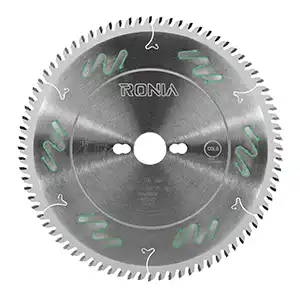
Beam Saw Blades for Precise, Efficient Industrial Wood Cutting
Introduction
For panel processing, furniture production, and demanding workshop environments, reliable Beam Saw Blades are essential for clean cuts, consistent dimensions, and efficient production. The right blade helps reduce material waste, improve edge quality, and maintain stable machine performance across long production runs. Ronia supplies precision cutting solutions designed for professional users. Explore the category, compare suitable options, and contact the sales team for expert guidance and a quote.
What are Beam Saw Blades?
Beam Saw Blades are circular cutting tools designed for beam saw machines used to process wood-based panels and sheet materials. They rotate at high speed while the saw carriage or cutting system moves through the workpiece, creating accurate straight cuts across large panels.
These blades are commonly used for MDF, particleboard, melamine-faced panels, plywood, laminated boards, and similar materials. Their tooth geometry, diameter, kerf, and cutting characteristics influence surface quality, cutting speed, noise, and blade life. Choosing a blade that matches the machine and material helps manufacturers achieve repeatable results while controlling operating costs.
Key Features and Benefits
- Precision cutting: Carefully engineered tooth geometry supports accurate dimensions and clean panel edges, helping manufacturers maintain consistent product quality.
- Durable construction: Quality materials and robust carbide teeth withstand demanding production cycles and provide dependable service life.
- Efficient production: Suitable cutting geometry allows fast material processing, helping workshops increase output without unnecessary downtime.
- Reduced waste: Clean and stable cuts can minimize chipping, rework, and material loss, improving overall production efficiency.
- Reliable safety: Correctly matched blades support controlled cutting performance and help operators maintain safer machine operation when used according to manufacturer instructions.
- Consistent finish: Optimized tooth configurations produce smoother surfaces and cleaner edges for furniture, cabinetry, and interior panel applications.
- Cost control: Longer service intervals and predictable performance can reduce replacement frequency and support better cost planning.
Types of Beam Saw Blades
Blades for Solid Wood and General Wood Cutting
These blades are selected for applications involving solid wood, timber components, and general woodworking operations. Their tooth configurations are designed to balance cutting speed with surface quality, making them suitable for workshops handling varied wood materials.
Blades for MDF, Particleboard, and Laminated Panels
These blades are designed for engineered wood panels where clean edges and resistance to abrasive surfaces are important. They are widely used in furniture factories, cabinet production, and panel processing lines where consistent results are required across high production volumes.
Blades for Melamine and Veneered Boards
Melamine and veneered panels require cutting solutions that help control chipping and protect the visible surface. These blades are useful for furniture and interior manufacturers that need accurate sizing and a professional edge finish.
Machine-Specific and Production-Focused Blades
Beam saw blades can also be selected according to machine specifications, production speed, and required cut quality. The cutting system itself is usually electrically powered, while some workshop equipment may use pneumatic components for clamping or material handling. Battery-powered or pneumatic blades are not typical for industrial beam saw cutting, so buyers should confirm machine compatibility before ordering.
How to Choose the Right Beam Saw Blades
- Match the machine: Check the blade diameter, bore size, kerf, rotation direction, and maximum permitted speed against your beam saw specifications. Correct dimensions are essential for safe and accurate operation.
- Identify the material: Select tooth geometry and blade construction according to MDF, particleboard, plywood, laminated panels, solid wood, or other materials. Abrasive boards may require specialized carbide configurations.
- Consider production volume: Low-volume workshops can prioritize versatile blades and manageable replacement costs, while industrial manufacturers may benefit from high-durability solutions optimized for continuous production.
- Define the required finish: If your products require visible, chip-free edges, prioritize blade designs focused on fine cutting quality. For rough sizing or secondary processing, a faster configuration may be more practical.
- Compare total value: Do not evaluate price alone. Consider blade life, cutting speed, sharpening options, downtime, material waste, and after-sales support to determine the most suitable investment for your operation.
Why Choose Ronia for Beam Saw Blades
Ronia combines Turkish engineering expertise with practical knowledge of professional woodworking requirements. Its cutting solutions are developed with attention to precision, durability, machine compatibility, and dependable performance, helping workshops and manufacturers build efficient production processes.
For businesses sourcing the best woodworking tools and industrial wood cutting equipment, product quality is only one part of the purchasing decision. Ronia supports professional buyers with dependable product information, spare parts availability, after-sales assistance, and practical guidance for selecting suitable cutting solutions.
Where applicable, Ronia products and manufacturing processes support international market requirements, including CE and ISO-related quality and safety standards. Buyers should review the certification and compliance details for the specific product before purchase. This approach helps businesses make informed procurement decisions and maintain appropriate standards within their facilities.
Ronia also supports customers beyond the initial purchase. Spare parts and after-sales support can help reduce operational interruptions, while global shipping availability makes it easier for international customers to source equipment and cutting solutions from Turkey. For workshops seeking quality power tools for workshops and professional cutting equipment, Ronia offers a practical supply partner focused on long-term business needs.
For procurement teams, selecting the correct blade also protects machine investment, supports predictable maintenance planning, and helps production managers achieve dependable throughput across changing orders and demanding customer requirements throughout every working shift.