


Product categories
- Cutting Tools 348
- Boring Bits 23
- Brazed Cutters 10
- Cutterheads With Changeable Knives 4
- Router Bits 265
- Bits For Manual Router 92
- CNC Router Bits 167
- Aluminium Folding Groove 1
- Ball Grooving Bits 1
- Bowl and Tray Bits 11
- Bull Nose Bits 17
- Dovetail Bits 1
- Drawer Pull Bit 3
- Engraving Bits 2
- Half Round Bits 3
- Keyhole Bits 2
- Lock Miter Bits 2
- Plunge Cut Roundover Bits 7
- Point Cut Roundover Bits 5
- Profile Cutting Bit 37
- Raised Panel Bits 2
- Roundover Bits 4
- Slotting Cutter Bit 4
- Stair Tread Bits 5
- Straight Bits 39
- T-slot router Bits 3
- V-Groove Bits 18
- Solid Surface Bits 6
- Saw Blades 46
- Hardware 204
- Connections 15
- Drawer slide 15
- Hinge 51
- Kitchen Accessory 35
- Opening System 4
- screw 20
- Shelf 1
- Shelf Support 20
- Wardrobe Accessory 43
- Accessory Storage Box 5
- Clothes Rail 8
- Mirror 2
- Safe Box 1
- Shoe Rack 2
- Storage Box 25
- Line/Automation/Software 21
- pneumatic tools 54
- Portable Machinery 16
- Sheet Working Machinery 30
- CNC Machining center 18
- Edge Banders 6
- Curved 1
- Industrial 6
- Sizing Machines 2
- Beam Saw 2
- Uncategorized 7
Showing the single result
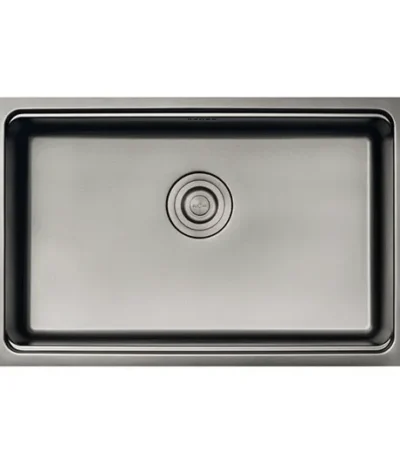
Sinks for Professional Kitchen and Furniture Manufacturing
Professional Sinks are essential components in modern kitchens, commercial workspaces, and furniture projects where hygiene, durability, and practical water management matter. For manufacturers and workshop owners, selecting the right sink helps deliver reliable functionality and a clean finished installation. Ronia provides solutions designed for professional applications. Explore the category, compare specifications, and choose a sink that matches your project, material, installation method, and expected workload.
What is Sink?
A sink is a fixed basin designed to collect and drain water during washing, cleaning, and food preparation. It is typically installed into or onto a countertop, cabinet, workbench, or specialized furniture structure, with a drainage connection directing used water into a suitable waste system. Depending on the design, a sink may include one or more bowls, integrated draining areas, mounting accessories.
In kitchen manufacturing, the sink is an important component. Its dimensions, depth, material, mounting method, and drainage configuration must work with the surrounding cabinet and countertop. Proper selection can improve installation accuracy, usability, hygiene, and customer satisfaction.
Key Features and Benefits
- Durability: Robust construction helps the sink withstand frequent washing, impact, moisture, temperature changes, and demanding daily use.
- Precision: Accurate dimensions and consistent manufacturing support easier installation and proper alignment with countertops and cabinets.
- Hygiene: Smooth, easy-to-clean surfaces help reduce residue buildup and support cleaner kitchen and commercial environments.
- Safety: Stable construction and suitable drainage connections help provide secure operation and reduce installation-related problems.
- Efficiency: Practical bowl layouts and functional dimensions can improve washing, cleaning, and food preparation workflows.
- Compatibility: Different sizes and configurations allow manufacturers to match sinks with various cabinet designs, countertops, and project requirements.
- Professional appearance: A well-selected sink complements surrounding furniture and contributes to a polished, finished installation.
Types of Sink
Single-bowl sinks provide one main washing area and are suitable for compact kitchens, apartments, workshops, and installations where efficient use of counter space is important. Their straightforward configuration can simplify cabinet planning and installation. They normally require no electric, battery, or pneumatic power.
Double-bowl sinks provide two separate working areas, allowing users to wash, rinse, or organize tasks more efficiently. They are useful in larger residential kitchens and commercial food preparation areas. Like standard sinks, they operate through manual water use and a connected drainage system.
Undermount sinks are installed beneath the countertop surface to create a clean transition between the worktop and basin. This configuration is popular in modern kitchens because it can simplify surface cleaning and create a streamlined appearance. Accurate cabinet and countertop preparation is essential for reliable installation.
Top-mount or drop-in sinks are positioned through an opening in the countertop, with the rim resting on the work surface. They can provide practical installation and are suitable for various cabinet and countertop materials. These sinks are commonly selected for renovation projects, standard kitchen production, and applications where straightforward installation is a priority.
Specialty sinks are designed for specific commercial, industrial, or space-conscious applications. Depending on the project, they may include deeper bowls, compact dimensions, integrated work areas, or specialized configurations. They are selected according to workflow, space, materials, and installation conditions.
How to Choose the Right Sink
- Assess workshop and installation size: Measure the available cabinet and countertop area before selecting a sink. Compact workshops and smaller kitchens may benefit from space-efficient designs, while larger projects can accommodate wider or multi-bowl configurations.
- Match production volume: High-volume manufacturers should prioritize durable designs that support repeated daily use and consistent installation. Lower-volume workshops may focus more on flexible sizing, simple installation, and efficient inventory management.
- Consider material and environment: Select a sink according to the countertop, cabinet structure, moisture exposure, cleaning routine, and expected temperature conditions. Compatibility helps protect surrounding materials and supports longer service life.
- Check technical specifications: Review overall dimensions, bowl depth, mounting requirements, drainage position, installation clearance, and included components. Accurate specifications reduce cutting errors, installation delays, and costly modifications.
- Balance budget and long-term value: Compare purchase cost with durability, maintenance requirements, installation time, replacement availability, and expected service life. A practical investment should support reliable performance without creating unnecessary operating or replacement costs.
Why Choose Ronia for Sink
Ronia combines Turkish engineering and manufacturing quality with practical solutions for professional woodworking, furniture, and kitchen applications. Its product approach supports B2B buyers seeking dependable components for organized production workflows. Customers looking for the best woodworking tools and reliable kitchen solutions can evaluate Ronia products according to technical specifications and application requirements.
Ronia serves international markets and develops products with applicable quality and safety requirements in mind. Relevant products may be available with CE and ISO certifications or supporting documentation according to the specific product and destination market. Buyers should verify the applicable certification and technical documentation for each selected item before procurement.
Spare parts availability is important when manufacturers and installers need to maintain project continuity. Where applicable, Ronia supports access to replacement components that can simplify maintenance and reduce unnecessary downtime. After-sales support can also help customers with product selection, installation questions, technical requirements, and ongoing purchasing needs.
Global shipping availability allows manufacturers, distributors, contractors, and buyers to source Ronia solutions for projects in different markets. Alongside sinks, businesses can evaluate quality power tools for workshops and industrial wood cutting equipment when developing a broader professional procurement strategy.
For manufacturers handling repeated kitchen projects, standardizing compatible sink models can simplify purchasing, cabinet preparation, and installation procedures. Consistent product selection can also make staff training easier, improve stock planning, and reduce variations between completed units. This approach is useful for residential developments, hotels, offices, restaurants, and commercial interiors where dependable installation quality matters.

