


Product categories
- Cutting Tools 348
- Boring Bits 23
- Brazed Cutters 10
- Cutterheads With Changeable Knives 4
- Router Bits 265
- Bits For Manual Router 92
- CNC Router Bits 167
- Aluminium Folding Groove 1
- Ball Grooving Bits 1
- Bowl and Tray Bits 11
- Bull Nose Bits 17
- Dovetail Bits 1
- Drawer Pull Bit 3
- Engraving Bits 2
- Half Round Bits 3
- Keyhole Bits 2
- Lock Miter Bits 2
- Plunge Cut Roundover Bits 7
- Point Cut Roundover Bits 5
- Profile Cutting Bit 37
- Raised Panel Bits 2
- Roundover Bits 4
- Slotting Cutter Bit 4
- Stair Tread Bits 5
- Straight Bits 39
- T-slot router Bits 3
- V-Groove Bits 18
- Solid Surface Bits 6
- Saw Blades 46
- Hardware 204
- Connections 15
- Drawer slide 15
- Hinge 51
- Kitchen Accessory 35
- Opening System 4
- screw 20
- Shelf 1
- Shelf Support 20
- Wardrobe Accessory 43
- Accessory Storage Box 5
- Clothes Rail 8
- Mirror 2
- Safe Box 1
- Shoe Rack 2
- Storage Box 25
- Line/Automation/Software 21
- pneumatic tools 54
- Portable Machinery 16
- Sheet Working Machinery 30
- CNC Machining center 18
- Edge Banders 6
- Curved 1
- Industrial 6
- Sizing Machines 2
- Beam Saw 2
- Uncategorized 7
Showing all 5 results
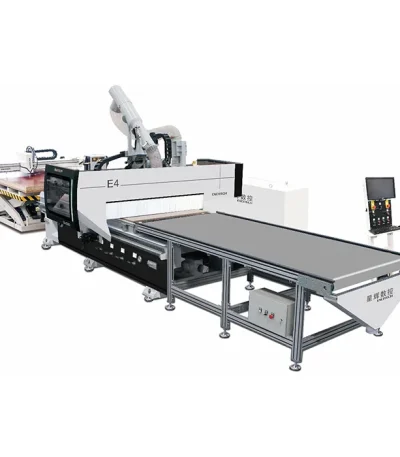
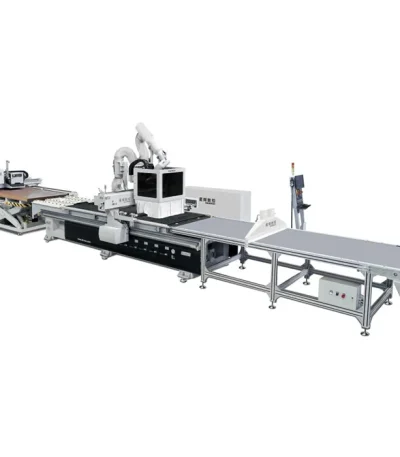
Nesting CNC Machine for Efficient Precision Woodworking
Modern furniture manufacturers need to cut multiple components quickly while maximizing every sheet of material. A Nesting CNC Machine combines computer-controlled cutting with optimized nesting software to process panels accurately and reduce material waste. For cabinet makers, furniture factories, and professional workshops, this technology can improve throughput, consistency, and production planning. Explore Ronia Nesting CNC Machine solutions to find equipment suited to your workflow and request a tailored quotation.
What is a Nesting CNC Machine?
A Nesting CNC Machine is a computer-controlled woodworking system designed to cut, drill, groove, and route multiple components from large panels. Unlike conventional cutting methods that process pieces individually, nesting technology arranges digital component shapes across a sheet according to an optimized cutting plan.
The machine uses CNC software to interpret digital drawings and automatically guide the cutting head along programmed paths. Depending on the configuration, it can process MDF, particleboard, plywood, melamine panels, and other sheet materials used in furniture manufacturing. This approach is especially useful for kitchens, wardrobes, office furniture, doors, shelving, and custom cabinetry.
Key Features and Benefits
- Material optimization: Nesting software arranges components efficiently on each panel, helping manufacturers reduce offcuts and improve material utilization.
- High precision: Computer-controlled movement produces accurate dimensions, clean routing paths, and consistent component geometry across production batches.
- Faster production: Automated cutting and drilling can process numerous components in a coordinated workflow, reducing manual measurement and handling.
- Flexible processing: One machine can perform cutting, grooving, drilling, and routing operations for different furniture designs and panel sizes.
- Reliable construction: Industrial frames, motors, spindles, and motion systems are designed to support demanding production environments.
- Improved safety: Automated positioning and controlled tool movement can reduce unnecessary manual interaction with cutting operations.
- Consistent quality: Digital programs allow repeated designs to be manufactured with dependable dimensions and machining patterns.
- Better workflow control: Integration with CAD and production software helps connect design preparation with actual manufacturing.
For businesses focused on industrial wood cutting equipment, nesting technology can also simplify production scheduling. Operators can prepare optimized cutting layouts before machining begins, making it easier to estimate material requirements and organize batches. This is particularly valuable when orders contain different cabinet sizes or customized furniture components.
Types of Nesting CNC Machine
3-axis Nesting CNC machines are a practical choice for standard panel processing. They use electric power and typically perform cutting, drilling, routing, and grooving operations for furniture production, cabinetry, and interior components.
Automatic Nesting CNC machines add features such as automatic tool changing, pneumatic clamping, automatic loading, or unloading. These systems are designed for medium and high-volume manufacturers that need continuous production and reduced operator intervention.
Multi-function Nesting CNC systems combine several machining capabilities within one platform. They may support drilling units, multiple spindles, advanced tool management, and production software for complex furniture workflows. Pneumatic systems are often used for secure workholding, while electric drives power the main machining functions.
How to Choose the Right Nesting CNC Machine
- Evaluate workshop space: Measure the available floor area, including loading zones, maintenance access, panel storage, and operator movement. Choose a machine footprint that supports safe and efficient material handling.
- Match production volume: Estimate daily panel consumption and required output. Smaller workshops may need a straightforward configuration, while industrial factories can benefit from automatic loading, unloading, and advanced tool-changing capabilities.
- Check material compatibility: Identify the materials and panel thicknesses you process most frequently. Confirm spindle power, cutting capacity, tooling options, vacuum requirements, and working dimensions before purchasing.
- Review software integration: Choose a CNC platform that works smoothly with your existing CAD or furniture design workflow. Compatible nesting software can reduce programming time and help operators optimize every sheet.
- Calculate the total investment: Look beyond the initial machine price and consider tooling, installation, training, maintenance, energy consumption, spare parts, and technical support. A well-selected machine can provide stronger long-term value than a low-cost system with limited capabilities.
Buyers should also consider future expansion. A scalable configuration can accommodate new product designs, additional tooling, higher order volumes, and evolving production requirements. Reviewing warranty conditions, service availability, documentation, and operator training before purchase can further reduce operational risks.
Why Choose Ronia for Nesting CNC Machine
Ronia combines Turkish engineering and manufacturing expertise with solutions developed for professional woodworking operations. Its Nesting CNC Machine range is intended for businesses that require accurate panel processing, dependable performance, and efficient production workflows.
Ronia emphasizes manufacturing quality and supports applicable equipment with internationally recognized standards and certifications, including CE and ISO where relevant. These credentials provide useful reference points for B2B buyers evaluating conformity, manufacturing processes, and equipment quality.
Spare parts availability is also important for production continuity. Access to suitable replacement components can help reduce downtime and support scheduled maintenance. Ronia provides after-sales support to assist customers with operation, maintenance, technical questions, and equipment requirements.
Global shipping availability allows international buyers and distributors to source professional machinery from Turkey. Ronia also offers a broader selection of best woodworking tools and quality power tools for workshops, helping businesses build complementary production capabilities around their CNC equipment.
Whether you manage a specialized cabinet workshop or a large furniture manufacturing facility, Ronia can help you identify equipment that matches your production environment. The right CNC configuration can support precise machining while improving material efficiency and overall workflow.
For manufacturers seeking quality power tools for workshops, nesting equipment can become a central production asset. It connects digital planning with repeatable machining, helping teams respond efficiently to standard orders, custom designs, and changing material requirements without sacrificing production accuracy during busy production periods.

